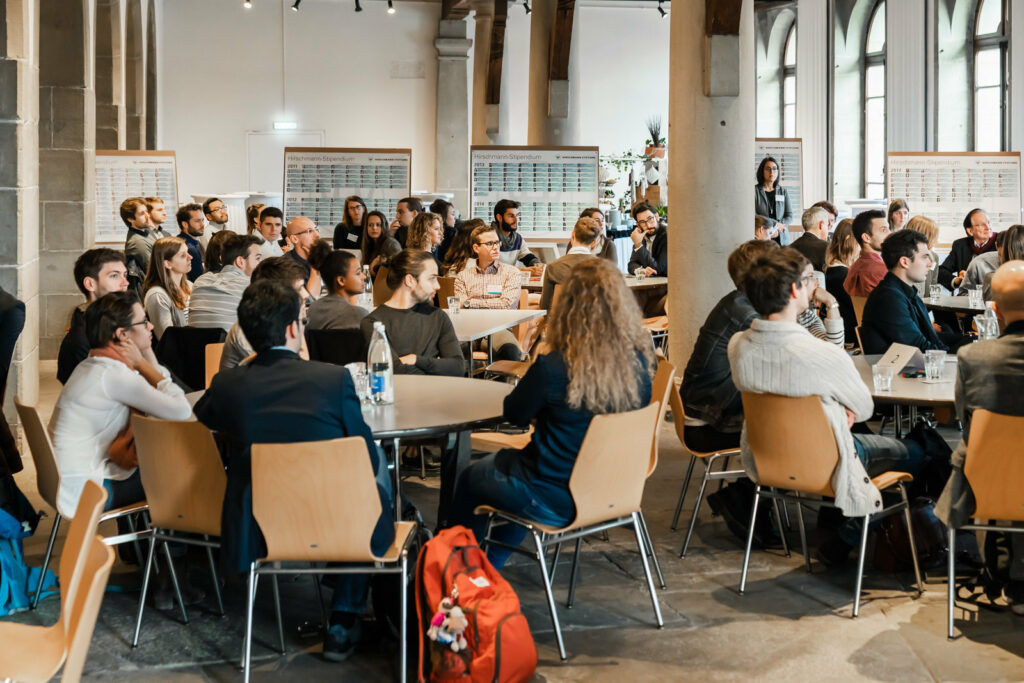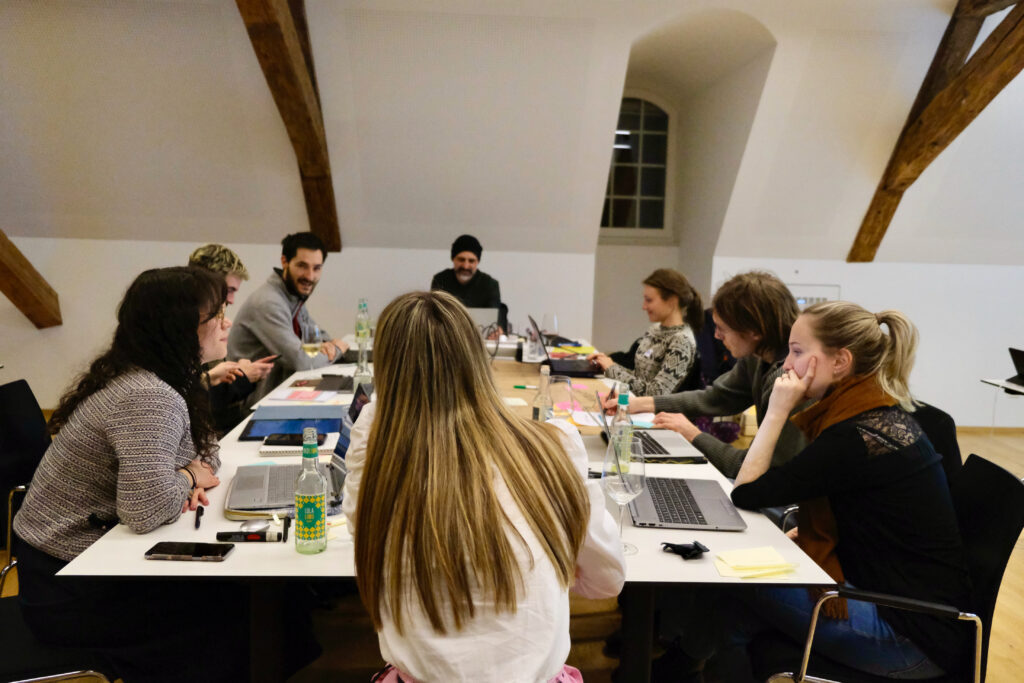

Each year, foraus and the Lucerne University of Applied Sciences and Arts accompany two cohorts of students excelling at Swiss Universities of Applied Sciences who are supported in their diverse careers by a scholarship from the Hirschmann Foundation. Enabled by its innovative strength and its experience with participatory formats, foraus organizes interactive workshops for the scholarship holders, where they can get to know each other and discuss a future-oriented topic of their choice together. In order to develop constructive, new solutions for the chosen social problems, a lively exchange is animated on the Policy Kitchen platform. After the kick-off workshop, the fellows are accompanied in the output process and create blog posts and other products on the topic.

How will the transformation in the way we work accelerate or mitigate the trend of individualisation in our society?
The future of human mobility
How can access to knowledge and information be democratized?
- What role may music have in the democratization of knowledge and information in the futures space?
- How is information about nature and its preservation spread today, and how should knowledge become more accessible in the futures space?
- How is information about nature and its preservation spread today, and how should knowledge become more accessible in the futures space?
- How much knowledge and information can actually be accessed – and processed – by an individual?
- What is the role of the past – and the future – in knowledge and information and the accessibility of it?
Biodiversity in Switzerland
How does the young generation see themselves revolutionizing civic action? Where do they see priorities for us as individuals to contribute to society at large?
Bringing together 25 young thinkers from a variety of academic fields, we used Policy Kitchen to develop visions for how artificial intelligence is likely to affect their futures. The result is a four-part blog series on how novel tools will shape our lives and societies.
Cohort VII worked on the following guiding question: What could we radically share within five years to create a more just and sustainable society for our grandchildren?
The participants of Cohort VI created blog posts on the potential of sharing economy approaches in the fields of caregiving and care work, education and knowledge transfer, as well as leisure and recreation.
Drawing on innovative ideas and scientific evidence, they developed concrete solution elements for a path toward a more human- and nature-friendly world.
The 27 students of Cohort VIII engaged with the following guiding question: Is direct democracy an outdated model in a rapidly changing world?
To address this question, the cohort developed and delivered a variety of outputs by the end of the project:
- A blog post titled Decrypting Technobabble – How to Make Complex Votes More Accessible to a Young Public.
- A second blog post titled Switzerland’s Democratic Dilemma: How to Empower the Next Generation of Voters.
- An Instagram video campaign presenting opportunities for political participation for students without voting rights.
- A participatory concert on the theme “Is direct democracy outdated for our times?”, encouraging audience members to discuss democracy-related questions together between musical pieces.
Cohort IX submitted their projects answering the following guiding question: What innovative approaches exist to tackle both workforce shortages and migration at the same time?
- Blog Post 1: “The Role of Immigrants in Addressing Labor Shortages” on biases in the recruitment process.
- Blog Post 2: “Who cares about us?” on challenges related to migrant workers in Switzerland’s healthcare sector.
- A video campaign: on Instagram on the subject “A new start in Switzerland – stories from skilled workers”.
- A Networking and career event: with 3 experts from different fields on how to integrate in the Swiss job market as a foreign student.
- A creative depiction: A Performative Journey Through the Experiences of Immigrants in Switzerland, with a special emphasis on life, labor, context, and integration, as well as associated challenges and struggles.
Cohort X has addressed the following question and developed a range of projects in response: What innovative solutions can Swiss companies implement to strengthen ethical business practices and foster the development of positive, long-term relationships with local communities?
- Blog-Article 1: Global Responsibility Requires Cultural Sensitivity How Swiss Companies Can Foster Ethics and Build Long-Term Community Partnerships.
- Blog-Article 2: Laying a foundation for positive relationships prior to collaboration in novel markets – a How-To Guide.
- Blog-Article 3: Bitter Truths Behind Sweet Swiss Chocolate.
- Social Media Campaign: Sustainability of jeans production in Switzerland and how to approach this topic in an environmentally conscious way.
- Online-Event via Zoom: Where Sustainability Meets Sparkle. An event on fair and sustainable jewelry production.