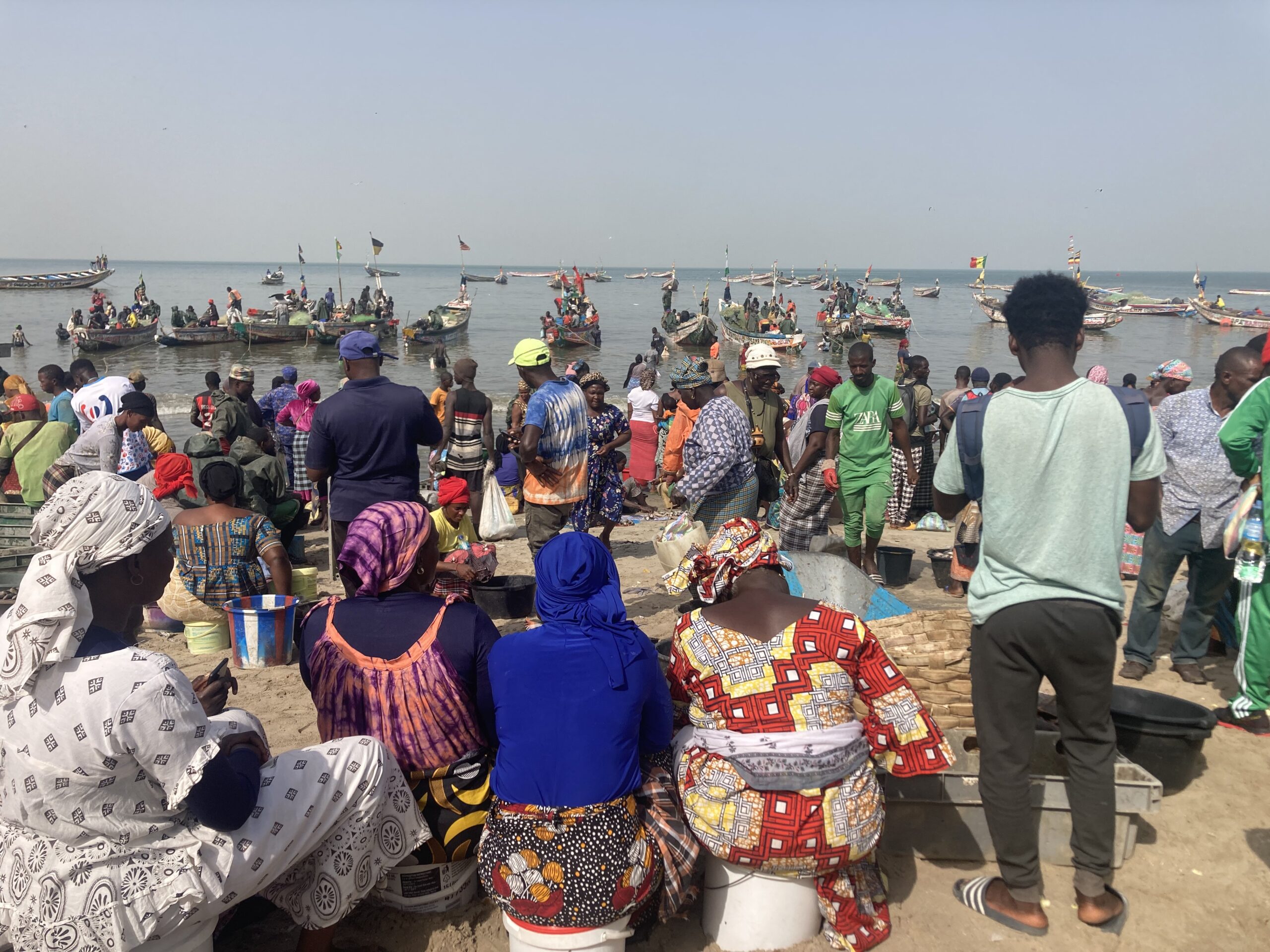
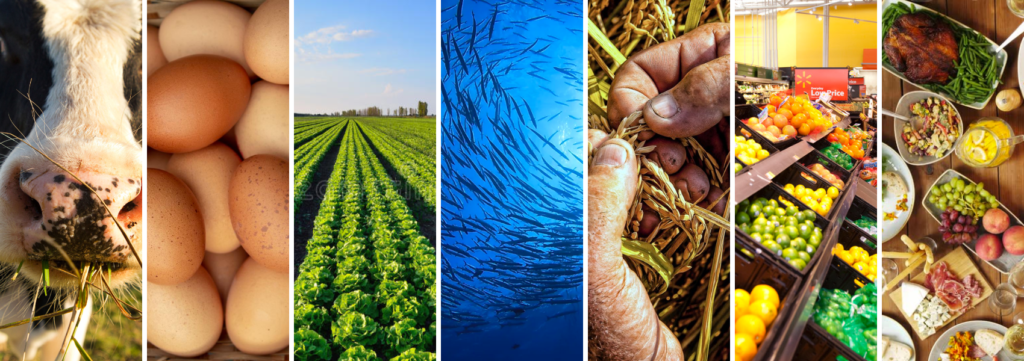
As the 21st century unfolds, the world’s food systems stand at a critical juncture. What we eat, how it’s grown, and how it reaches our plates have implications beyond personal health— they shape livelihoods, ecosystems, and the planet’s future. To make sense of this complexity, 25 authors co-created five radical visions for the future of Food Systems in this Policy Brief. The basis of their chapters was a workshop that was implemented in March 2025 on the same topic as this Policy Brief. The event and subsequent publication of results are part of foraus’ Global Labs series, which aims to connect students from Geneva and beyond with the International Geneva ecosystem, to foster innovative policy ideas. Through an exchange with professionals and by co-writing a policy brief, each Global Lab strives to strengthen students’ set of hard skills (e.g. policy writing), soft skills (e.g. public speaking), and personal networks, while providing key multilateral fora with youth’s inputs.

Authors: Nazanin Asbaghipour, Ebrima Barrow, Ruth Bandomah, Ana Chamon, Triana Gil, Mariana Hervigo, Giulia Azzarello, Jean-Pierre Desarzens, Suban Biixi, Romberg Gondim, Mitsuki Ishii, Rebecca Kübler, Margaux Serratore, Kuei-Jr Liao, Antonia Massocco, Anna-Kristiina Pae, Pilar Alejandra Paradiso, Angelina Pavlenko, Andrea Peroziello, Ankita Sharma, Yuhui Song, Shilpa Ann Thomas, Yating Wang, Carolyn Wu
TéLéCHARGER LE DOCUMENT
Partager
Fabian Dalbert
Vera Eichenauer
Darius Farman
Oskar Jönsson
Idris Abdelkhalek
Alina Begley
Nathalie Brügger
Kaan Bayir
Alicia Blair
Elisa Cadelli
Stefan Dörig
Elodie Gerber
Oliver Guggenbühl
Alicia Joho
Aude Juillerat
Fabian Marugg
Priya Mohanty
Sabrina Nick
Andreas Oeschger
Fabian Ottiger
Johan Sauser
Franziska Vogel
Dounia Rhouma
Lévi Sollberger
Marion Hischier
Aurèle CottonWas sind die grossen aussenpolitischen Herausforderungen der Schweiz, über die unsere Politiker:innen, Entscheidträger:innen und relevanten Akteur:innen informiert sein müssen, damit sie in den nächsten vier Jahren die nötigen Entscheide treffen können? In 14 prägnanten Aussenpolitik-Briefings untersuchen foraus-Expert:innen, wie das Schweizer Parlament die Aussenpolitik der letzten vier Jahre mitgestaltet hat und blicken auf anstehende Herausforderungen der Legislatur 2023-2027.
Zu den Einzelpublikationen:
TéLéCHARGER LE DOCUMENT
Partager
Over the past decades, global environmental governance has significantly developed and now includes a large number of international agreements, mechanisms and institutions. However, as 2019’s climate strikes and demonstrations have highlighted, no significant improvement has been achieved. In order to achieve long-term and profound progress in environmental governance, policy focus needs to be complemented by intensified efforts to strengthen environmental rule of law. To do so, the capacity of international courts to pronounce judgements on environmental matters, the clarity and scope of environmental legal principles, and compliance with and implementation of judgements must be further strengthened. This policy brief outlines concrete steps which justice and foreign ministries can take, both nationally and internationally, in order to strengthen environmental rule of law.
TéLéCHARGER LE DOCUMENT
Partager
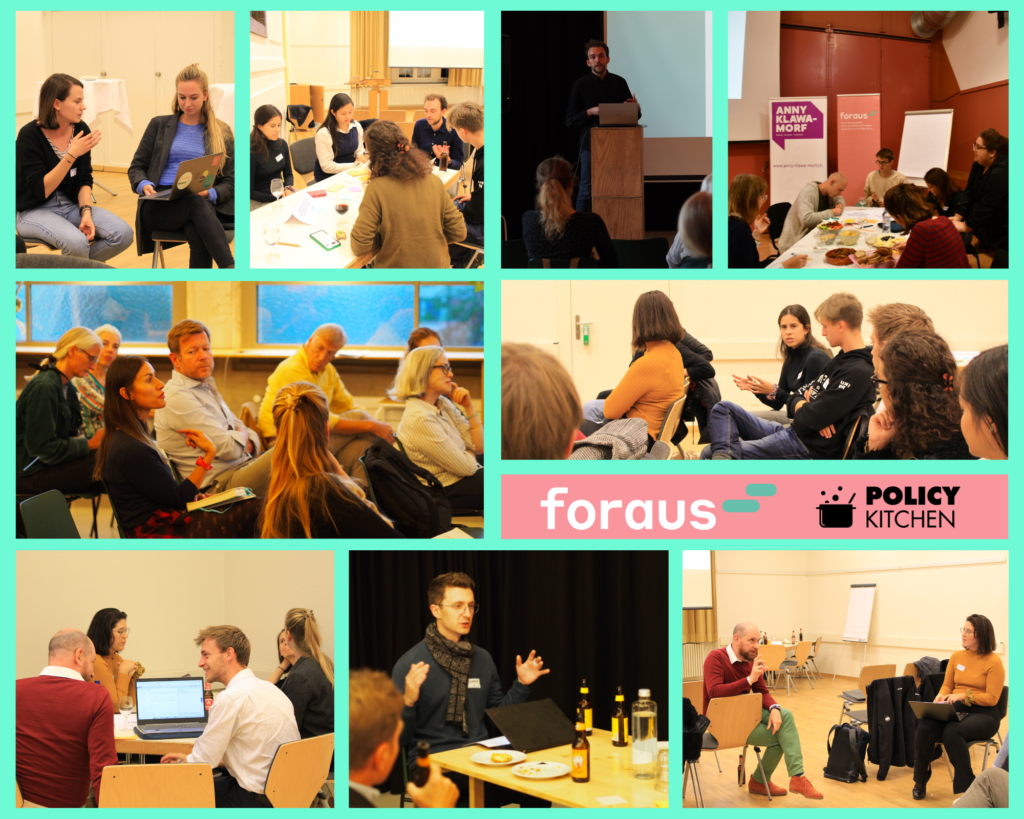
Biodiversity is in a desolate state. In their first report released in May 2019, the Intergovernmental Science-Policy Platform on Biodiversity and Ecosystem Services (IPBES) finds that biodiversity is declining at rates faster than at any time in human history, threatening ecosystem functions critical to human survival and wellbeing. While the report is novel in terms of its scope and multilateral backing, the overall trends were long known, yet largely outside of the awareness of society. That’s why, in autumn 2018, foraus set out to crowdsource innovative ideas on how to tackle the biodiversity crisis through a newly developed online policy innovation tool: Policy Kitchen. Together with experts, foraus defined three challenges with a link to foreign policy, in which action is particularly needed: How to square biodiversity conservation and economic development? How to make trade more biodiversity-friendly? And how to improve global governance around biodiversity conservation? foraus discussed these questions with over 100 participants from various backgrounds. The process resulted in 43 ideas on biodiversity conservation, four of which were developed further and are presented in this publication.
TéLéCHARGER LE DOCUMENT
Partager
Die Schweiz war 2015 für einen Treibhausgas-Ausstoss von 48.1 Mio Tonnen CO2-Äquivalenten (CO2eq) verantwortlich. Die Emissionen sollen gegenüber 1990 mittels verschiedener Massnahmen um 50% gesenkt werden. Die Schweiz wird deshalb oft als Vorreiterin im Klimaschutz bezeichnet und ist Mitglied der «Paris High Ambition Coalition». Umfassende Klimaziele sind komplex. Darum schlagen die Autor*innen vor, die Forschungs- und Innovationsstärke der Schweiz zu nutzen, um Klimadaten besser zugänglich zu machen. Durch die Gründung eines Swiss Open Climate Data Centers stünden sowohl für Forschung als auch Unternehmen mehr Daten im Klimabereich zu Verfügung. Damit unterstützt die Schweiz einerseits eine wissenschaftsbasierte Klimapolitik. Andererseits ermöglicht der Zugang zu Daten die Entwicklung neuer Technologien und Dienstleistungen und stellt damit einen wichtigen Standortfaktor dar für Unternehmen, welche aus innovativen Lösungen tatsächliche Anwendungen entwickeln. Durch gezielte Förderung von Open Data Projekten, bspw. als Kriterium bei Nationalfonds-Projekten, kann die Schweiz den Datenzugang zusätzlich antreiben.
TéLéCHARGER LE DOCUMENT
Partager
TéLéCHARGER LE DOCUMENT
Partager