Our Content

Migration

Blog posts

Publications

September 2023

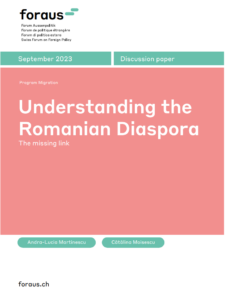
Understanding the Romanian Diaspora: The missing link

Between 2010 and 2021, the percentage increase of Romanian nationals in Switzerland reached 295.1%, a trend likely to continue. Additionally, Romania is the second largest beneficiary of Swiss cohesion funding. It shouldn’t be surprising, therefore, that understanding diasporas and migrant communities is the first step towards evidence-based policymaking in Switzerland. But whom to engage and how? Andra-Lucia Martinescu and Catalina Moisescu explored this question in their policy brief by using the case study of the Romanian diaspora in Switzerland.

TéLéCHARGER LE DOCUMENT

Partager

December 2021

Quo vadis? Envisioning human mobility for 2050

One year into the coronavirus pandemic that brought the world to a halt, the Open Think Tank Network’s grassroots think tanks partnered with the Kenyan-based youth empowerment organization, The Youth Café, to reflect on the impact of current transformative events on the various forms of migration. Recognizing that the future is unpredictable and with the aim of unraveling the range of possibilities it holds, a methodology to democratize strategic foresight was pioneered. The project engaged over one hundred participants from across the globe in a three-part workshop series and on the innovation platform Policy Kitchen. This report and an accompanying podcast series are the results of the participatory strategic foresight process. Diverse perspectives on the future of migration and crowd-sourced migration policy actions were ideated throughout the project. The project team regrouped the ideas into four key avenues for policymaking to set the political course for the participants’ visions of the future today, which are the following: Fair remuneration and inclusive working conditions; addressing the positive impact of migration on the social and economic challenges of an aging society; increase the decision-making power of cities and local level actors in migration management; and strengthening of urban-rural linkages in the context of climate change resilience and adaptation.

TéLéCHARGER LE DOCUMENT

Partager

October 2020

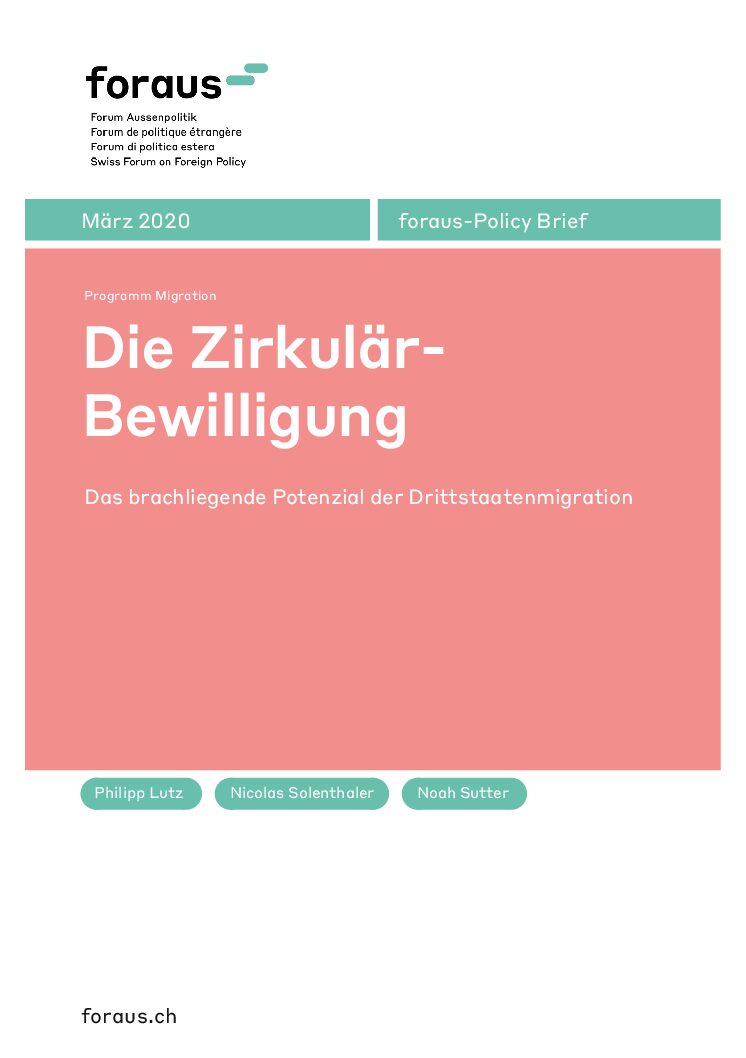
Die Zirkulär-Bewilligung. Das brachliegende Potenzial der Drittstaatenmigration

Die foraus-Autoren Philipp Lutz, Nicolas Solenthaler und Noah Sutter fordern die Einführung einer ‘Zirkulär-Bewilligung’ für Drittstaatenangehörige. Damit kann das Entwicklungspotential zirkulärer Migrationsformen besser ausgeschöpft werden. Der Schlüssel dazu besteht in der Flexibilisierung von Aufenthalts- und Niederlassungsbewilligungen für Drittstaatsangehörige. Ein temporärer Aufenthalt im Ausland soll nicht mit dem automatischen Verlust des Aufenthaltsrechts in der Schweiz einhergehen. Ohne eine Liberalisierung der Einwanderungskriterien wird so eine win-win-win Situation geschaffen: Die Schweiz profitiert von Fachkräften bei temporären Engpässen, die Herkunftsländer durch Rückflüsse von Humankapital und für die Migrierenden werden transnationale Lebensentwürfe realisierbarer.

TéLéCHARGER LE DOCUMENT

Partager

February 2019

Swiss Refugee Partnership: Eine neue Zulassungspolitik im Schweizer Asylwesen

Die Schweizer Asylpolitik fluktuiert zwischen humanitärer Solidarität und politischer Abwehrreflexe. Gegenwärtig gelangen Geflüchtete meist durch irreguläre Flucht in die Schweiz, wobei deren Aufnahme die Bevölkerung spaltet. Um dieses Dilemma der Schweizer Asylpolitik zu adressieren, schlagen die foraus-AutorInnen ein neues Zulassungsmodell für Resettlement-Flüchtlinge vor. Dabei sollen Privatpersonen und zivilgesellschaftliche Organisationen die Aufnahme von Geflüchteten mitgestalten können, indem sie eine Partnerschaftsvereinbarung zur Aufnahme und Begleitung einer geflüchteten Person unterzeichnen. Die PartnerInnen setzen private Ressourcen dafür ein und können damit aus Eigeninitiative für die Bereitstellung von humanitärem Schutz beitragen. Das Modell der Swiss Refugee Partnership besitzt das Potential, die politische Legitimität sowie die demokratische Akzeptanz der Schweizer Asylpolitik zu stärken. Das Modell festigt die Input-Legitimität durch die Erweiterung der Mitgestaltungsmöglichkeiten der Bevölkerung und der Zivilgesellschaft sowie durch die stärkere Verknüpfung der Zulassungspolitik mit der Aufnahmebereitschaft der Bevölkerung. Gleichzeitig wird die Output-Legitimität gestärkt, indem ein gezielterer Schutz besonders verletzlicher Personen mit ausgewiesenem Schutzbedarf ermöglicht wird und Geflüchtete in der Schweiz verbesserte Integrationsperspektiven erhalten. Es findet ein besseres Matching zwischen Geflüchteten und Aufnehmenden statt: Jene die Schutz brauchen kommen dorthin, wo sie auf Offenheit und Unterstützung zählen können. Mit dem Modell einer Swiss Refugee Partnership lässt sich die Resettlement-Politik der Schweiz stärker institutionalisieren und flexibilisieren. Die Swiss Refugee Partnership erweitert die humanitären Kapazitäten der Schweiz und minimiert die Belastungen für die Gesamtgesellschaft. Dadurch verspricht das Modell eine substanzielle Innovation jenseits des etablierten Konflikts zwischen Abschottung und Willkommenskultur.

TéLéCHARGER LE DOCUMENT

Partager

August 2017

Prisoners of the Dublin Dilemma

The humanitarian crisis at the internal and external borders of Europe and the dysfunctionality of the Dublin Regulation call for political responses to the challenges posed by humanitarian migration to Europe. The European countries are deeply divided on how to reform the Common European Asylum System. Attempts to relocate asylum seekers across Europe have not succeeded and revealed the lack of solidarity among European countries. In this paper, we analyse the causes of the current asylum policy crisis in Europe and propose potential policy solutions. We conduct a thorough game-theoretical analysis of the incentive structures of countries and asylum seekers influenced by the rules of the Dublin Regulation. Based on this analysis, we propose a comprehensive reform of the Common European Asylum System.


TéLéCHARGER LE DOCUMENT

Partager

Projects

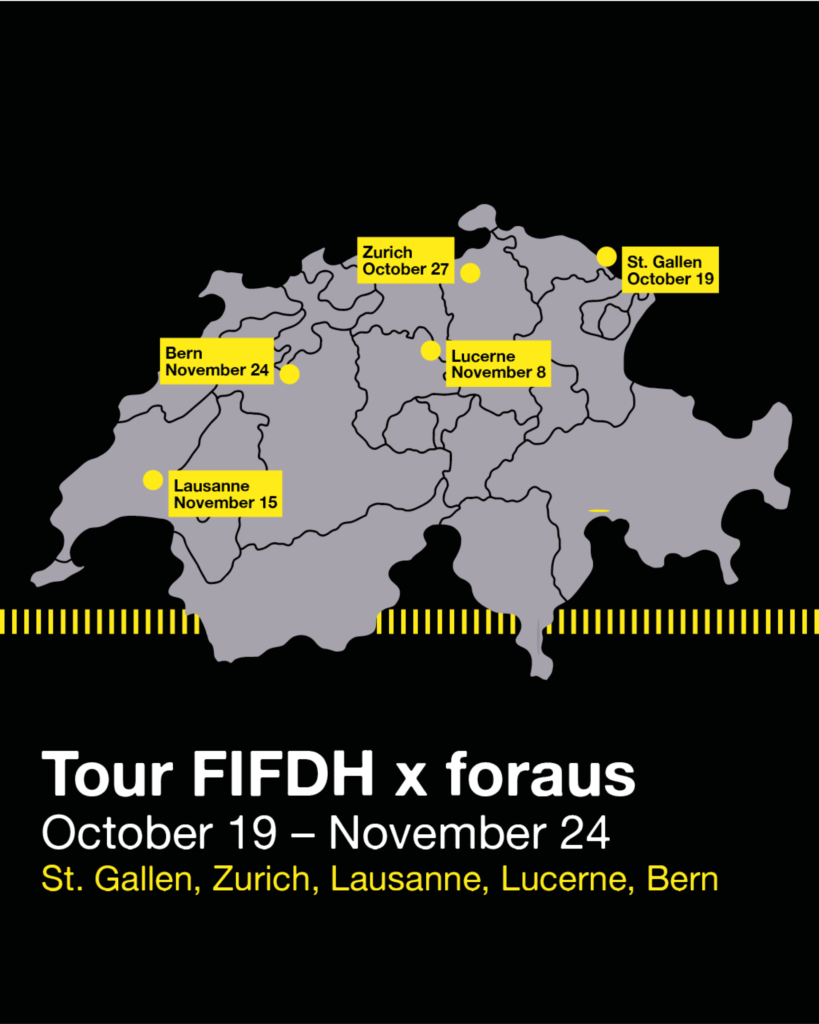
Tour de Suisse FIFDH x foraus

In fall 2022 foraus collaborated with the “International Film Festival and Forum on Human Rights” (FIFDH) through a Swiss Tour in partnership with its regional groups


EU citizens in Switzerland: your voice, your opinion!

With this project we give EU citizens living in Switzerland a voice and an active role in the public debate about climate, migration and digital policy, fostering a constructive dialogue about the shared future between Switzerland and the EU in the in these policy areas.

People

Policy Fellow

Gaya Koikkara

Policy Fellow

Debora Turuani

Policy Fellow

Elodie Gerber