Nos contenus

Paix et sécurité

Blog posts

Publications

mars 2026

Schweizer OSZE-Vorsitz 2026: Handlungschancen für die Schweiz

Der Schweizer OSZE-Vorsitz 2026 findet während einer tiefen Krise des Multilateralismus statt. Russlands Krieg gegen die Ukraine, die Erosion gemeinsamer Regeln sowie institutionelle Blockaden innerhalb der OSZE, insbesondere durch das Konsensprinzip, Vetopolitik und chronische Budgetblockaden, haben die Organisation stark geschwächt. Dennoch bleibt die OSZE unverzichtbar.


In diesem Policy Brief werden konkrete Handlungsempfehlungen entlang, aber auch über die fünf vom EDA definierten Prioritäten während des Vorsitzjahrs hinaus formuliert.

TéLéCHARGER LE DOCUMENT

Partager

août 2022

Kooperative Neutralität: Sieben Empfehlungen für ein Update der Schweizer Neutralität

Der Krieg in der Ukraine hat eine Neutralitätsdebatte in der Schweiz entfacht. Die Neutralität gehört zur Schweizer Identität. Je nach persönlicher Einstellung und Verständnis ist sie Ursprung von Stolz oder Scham. Die einen wollen sie abschaffen, die anderen zur Religion erklären, die meisten wollen sie zeitgemäss interpretieren. Zu dieser Diskussion möchte das vorliegende Policy Brief einen Beitrag leisten.

Die Autor:innen schlagen vor, auf nationaler Ebene Leitlinien für eine glaubwürdige Neutralitätspolitik zu erarbeiten. Sie sollen die Kohärenz, Kontinuität, Nachvollziehbarkeit und Vorhersehbarkeit der Schweizer Neutralitäts- und Aussenpolitik erhöhen und ihre Glaubwürdigkeit fördern. Auf internationaler Ebene soll die Schweiz mit anderen neutralen Staaten eine Koalition bilden und einen internationalen Dialog zur Bedeutung und Rolle der Neutralität in einer geopolitisch polarisierten Welt initiieren. Das vorliegende Policy Brief bietet Eckwerte für eine zeitgemässe Interpretation der Neutralität. Es empfiehlt konzeptionellen Konkretisierungen mit praktischen Auswirkungen und stellt konkreten Aktionslinien für eine differenzierte und glaubwürdige Neutralitätspolitik vor.

TéLéCHARGER LE DOCUMENT

Partager

juillet 2018

Rüstungsbeschaffung in der Schweiz – Vier Optimierungsvorschläge

Die Probleme in der Rüstungsbeschaffung bestehen nicht erst seit der Gripen-Abstimmung im 2014 und der Bodluv-Kaufsistierung im 2016. Die Gründe dafür sind in verschiedenen Untersuchungsberichten seitens Bund in den letzten Jahren untersucht worden. Trotzdem kann bisher noch keine grössere Verbesserung festgestellt werden. Die Beschaffungssituation ist prekär aufgrund der notwendigen Grossbeschaffungen für die nächsten 20 Jahren. Viele grössere Systeme sind bald am Ende ihrer Nutzungsdauer angelangt und nach den letzten Misserfolgen bei der Beschaffung von Gripen und Bodluv zeichnet sich ein Ressourcenengpass ab. Das vorliegende Diskussionspapier schlägt Anpassungen im Prozess vor, welche das Parlament früher und stärker in die Rüstungsplanung und -beschaffung involviert. Denn heute hat das Parlament zwar wenig Einflussmöglichkeit bei der Rüstungsplanung, aber es hat die Macht, die Beschaffung am Ende der Beschaffungsphase zu blockieren. Die Rüstungsplanung wird aktuell durch die Armeeplanung erarbeitet. Durch einen früheren Einbezug des Parlaments können das Verständnis des Beschaffungsvorhabens verbessert und frühzeitig mehrheitsunfähige Vorhaben (im Volk und Parlament) erkannt und diskutiert werden. Maxime soll nicht die Beschleunigung per se sein, sondern Effizienz mit grösstmöglicher Transparenz und sinnvollem Einbezug der Legislative. Ausserdem soll der Fokus verstärkt auf internationaler Kooperation liegen durch Massnahmen, welche die Attraktivität der Schweiz als Kooperationspartner erhöhen und die Ermittlung von Kooperationspartnern stärker institutionalisieren. Dies soll immer in Einklang mit der Neutralitätspolitik geschehen. Die internationale Kooperation und die systematische Prüfung aussenpolitischer Implikationen gewinnen aufgrund des Ressourcendrucks und der zu erwartenden Grossbeschaffungen im Ausland an Bedeutung.

TéLéCHARGER LE DOCUMENT

Partager

décembre 2014

Perspectives on the Role of the OSCE in the Ukraine Crisis

The Organization for Security and Co-operation in Europe (OSCE) is the most comprehensive regional security orga­nization. With its 57 participating states it comprises the whole of Europe as well as the Eurasian and Euro-Atlantic region. Inscribed in its DNA is the idea of providing a plat­form for dialogue between East and West. The OSCE, which can look back at over 40 years of existence, sur­vived all major geopolitical events in recent history, in­cluding the end of the Cold War. In the 21st century, how­ever, the relevance of the OSCE has sharply declined. Since the late 1990s, it was increasingly debated whether the OSCE had indeed be­come irrelevant and whether it could again become an important player in Europe’s security architecture, bridg­ing gaps and resolving conflicts between East and West. The year 2014 saw a reversal of this trend and suddenly put the OSCE in the international spotlight. The crisis in Ukraine, which began with a massive popular upheaval against the acting government and, following the over­throw of President Victor Yanukovych, evolved into a mili­tary confrontation with separatist militias in the East of the country, provoked a quick reaction from the OSCE which became the main actor to mediate between the conflict parties. Furthermore, the current chairmanship country, Switzerland, proved to be highly dedicated to the OSCE’s mission and invested a lot of effort in mediating between the conflict parties. The ongoing crisis in Ukraine not only revealed the OSCE’s lasting importance, but it also demonstrated the stark di­vide which still exists between the Western and Eastern participating states. Since the start of the crisis and espe­cially following Russia’s annexation of Crimea, relations between Russia and the West reached a new low. Mutual accusations and bellicose rhetoric provide for a very un­stable and uncooperative environment. In 2014, the gap between a resurgent Russia and the West became even deeper over the Ukraine Crisis. Nevertheless, despite a tense working mood and heated debates, the OSCE has managed to remain an important actor and its most im­portant actions in Ukraine were approved by consensus from all 57 participating states. Thus, it seems that the opposing parties do not want to seriously compromise the organization’s ability to do its work. This is an indica­tion that in times of crisis the OSCE remains an impor­tant and useful platform for dialogue between the East and West.


TéLéCHARGER LE DOCUMENT

Partager

mai 2016

Dialogue, Consensus, Comprehensive Security, Field Action: Why the OSCE Needs a New Impetus Now

The future of European security is at a crossroads. For the Organization for Security and Co-operation in Europe (OSCE) to rise to the challenges of the current crises, the organization must be reformed. This includes the need for an enhanced dialogue within the governing committees in Vienna and improved field operations in endangered regions. Moreover, the OSCE security dialogue must be revived and its role in the concert of international organizations (IOs) needs to be strengthened in order to enhance its interoperability and help it regain international relevance. The authors of this paper analyse these four subject areas and formulate a package of concrete recommendations. The proposals of this paper do not only address the German OSCE-Chairmanship but also aim at the upcoming Chairs, amongst them Austria.

TéLéCHARGER LE DOCUMENT

Partager

Projets

Futures Champions

Futures Champions est un projet du foraus qui vise à augmenter la participation des jeunes dans le débat démocratique.

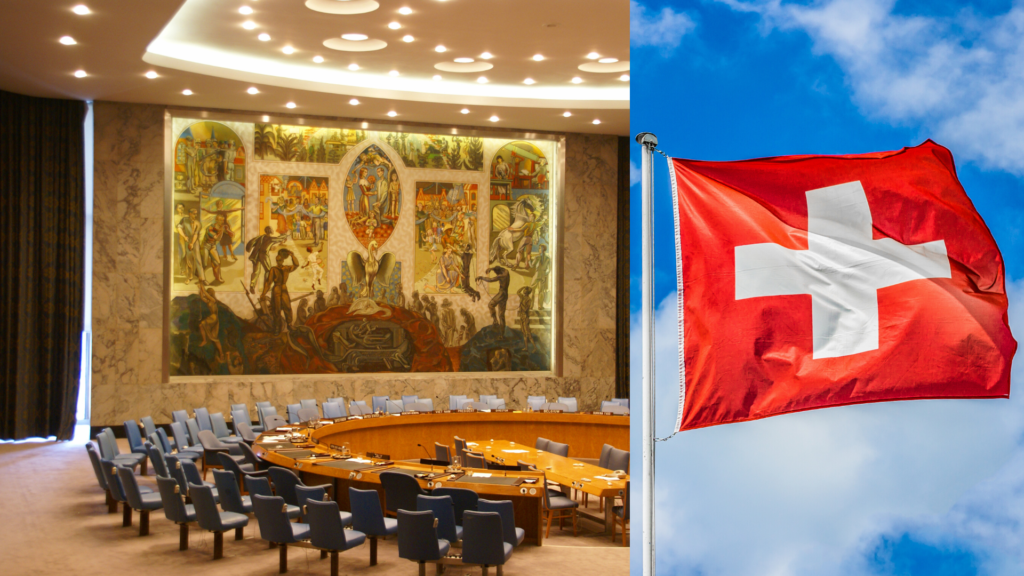
Switzerland at the UN Security Council in 2023-24

Dans ce projet, nous avons recueilli les idées des citoyen·nes sur les priorités thématiques que la Suisse pourrait suivre pendant son mandat au Conseil de sécurité de l’ONU en 2023-24. Au cours d’une série de quatre ateliers, nous avons échangé avec des expert·es du domaine et des citoyen·nes intéressé·es sur le rôle potentiel de la Suisse en tant que membre non-permanent du CSNU.

Futuring Peace in North East Asia

Les jeunes ont le potentiel de construire des sociétés pacifiques et de soutenir une gouvernance efficace dans leurs communautés, aujourd’hui et dans les décennies à venir. Former les jeunes à imaginer collectivement l’avenir peut garantir un impact durable et créer les conditions d’un dialogue et d’une coopération entre les gouvernements et les peuples d’Asie du Nord-Est, pour les générations à venir.

Personnes

Policy Fellow

Gaya Koikkara

Policy Fellow

Shari Goy

Policy Fellow

Nadine-Isabelle Kas

Policy Fellow

Lea Kohli

Policy Fellow

Yannick Scheidegger

Policy Fellow

Nazanin Asbaghipour